*If your practice has received an IRS notice, such as an IRS CP2000 notice or similar income mismatch letter, you are not alone. A growing number of dental practices across the country are receiving these notices as a direct result of errors on 1099s filed by dental insurance companies — not errors made by the practice.
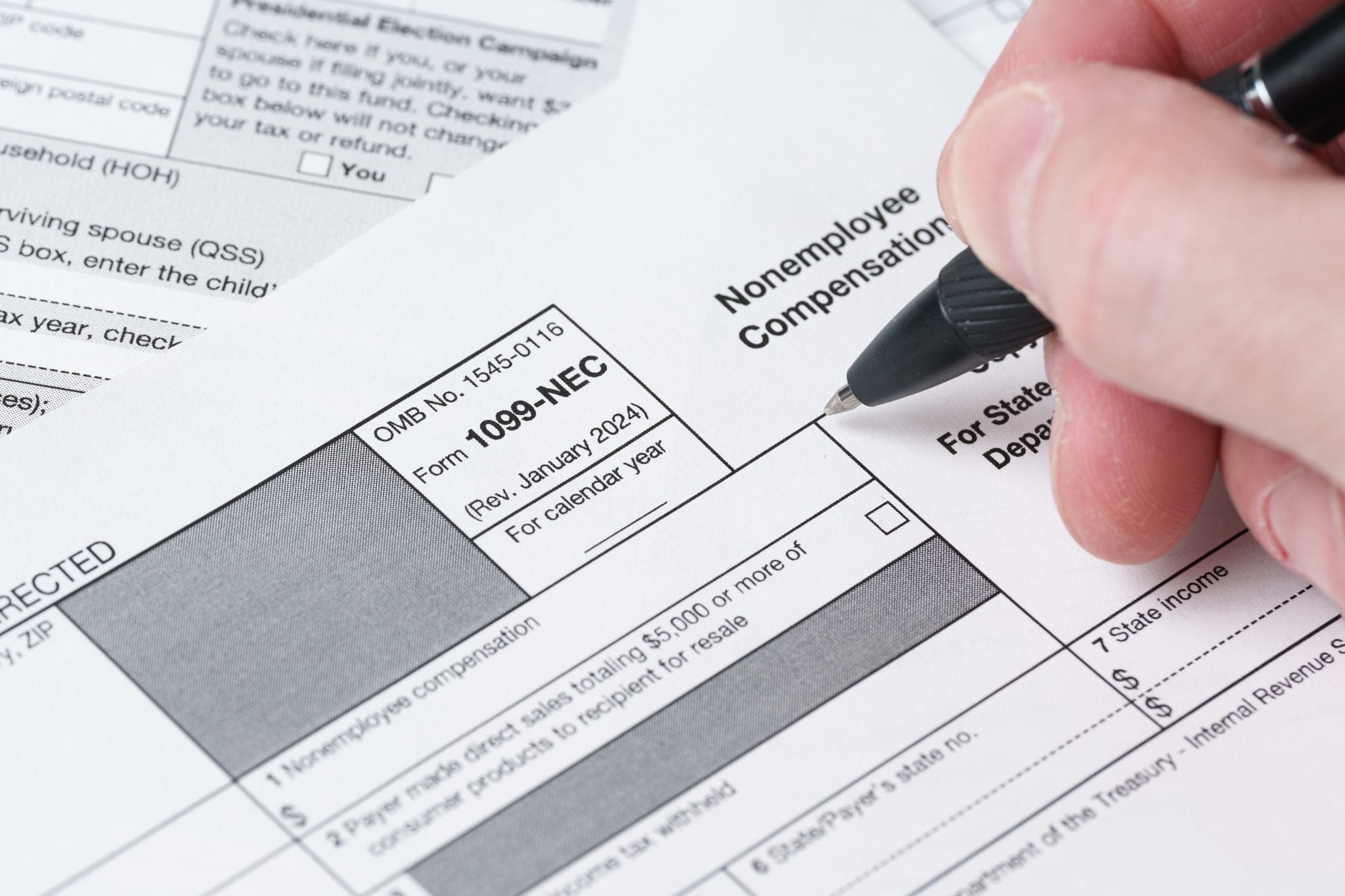
Insurance companies report payments made to dental practices each year on Form 1099-MISC or 1099-NEC. The Internal Revenue Service cross-references those third-party reports against the income reported on your tax return for that tax year. When the numbers don’t match, the IRS sends a 1099 income mismatch IRS notice — even when the practice reported its income correctly.
We are seeing this issue with increasing frequency among our clients, and the burden of resolving it falls entirely on the practice owner. For many business owners, this creates unnecessary stress during tax season and tax time. Understanding why these discrepancies occur and how to protect yourself is essential.
Why These Mismatches Happen
Insurance companies handle payment data for thousands of providers. Clerical errors are a well-documented problem, and dental practices are particularly susceptible to a handful of specific scenarios:
| Scenario | What Happens | Why It Matters |
| EIN / SSN Mismatch | An insurance company’s records incorrectly associate a PLLC’s Employer Identification Number (EIN) with another provider’s Social Security Number. Payments made to one provider end up reported under a different taxpayer’s identification number. | The IRS may flag your return as underreporting income that was actually paid to — and reported by — someone else entirely. |
| Claim Payment Misreporting | Insurance payments related to claims adjustments, retroactive fee schedule changes, or year-end true-ups are sometimes reported in the wrong tax year or duplicated across multiple 1099s. | Your reported income may be lower than what the insurer filed, triggering an IRS mismatch notice even though no income was missed. |
| Practice Sale or Acquisition | When a practice changes hands mid-year, insurance companies often struggle to split 1099 reporting cleanly between the old and new taxpayer. Payments may be reported entirely under one EIN when they should be split, or reported under the wrong entity after a transition. | Both the selling dentist and the acquiring dentist can receive IRS notices for income that belongs to the other party. Transition years are the highest-risk period. |
| Name / Entity Changes | A change in practice name, entity type, or banking information can cause an insurer’s records to fall out of sync. Payments made post-transition may be reported under the old entity’s information. | The result can be a 1099 issued to an entity that no longer exists, or duplicate reporting under both the old and new entity. |
The Real Cost to Your Practice
Receiving an IRS notice does not mean you did anything wrong. But it does mean you have a problem to solve — and that takes time and money.
Practice owners who receive income mismatch notices typically face:
- CPA or advisor time: Researching the discrepancy, gathering copies of all tax documents, and preparing a written response to the IRS requires professional time and often a consultation with a tax advisor or CPA.
- Owner time: Gathering records, reconciling invoices, reviewing pay stubs where applicable, and coordinating with the insurance company to obtain corrected 1099s.
- Stress and uncertainty: Even when the error is clearly the insurer’s fault, IRS notices create anxiety and distraction.
- Potential penalties and interest: If an IRS notice is not handled properly, the agency may assess taxes, penalties, and interest, and in some cases apply backup withholding rules if taxpayer information is incorrect.
The error originated with a third-party issuer. The cost of resolving it falls on you. This is exactly the kind of issue that proper recordkeeping and proactive review are designed to minimize.
What You Can Do to Protect Your Practice
1. Keep All 1099s from Insurance Companies on File
Every 1099 you receive from a dental insurance company should be saved — permanently digitized and organized by tax year. Do not discard these documents after filing your income tax return. If the IRS questions your income years later, these records are essential for clarification.
DAG Recommendation: Retain all 1099s for a minimum of 7 years. This supports audit readiness and aligns with IRS lookback periods under current tax law.
| DAG Recommendation: Retain all 1099 forms received from insurance companies and other healthcare payers for a minimum of 7 years. This covers the IRS’s extended 6-year lookback period for substantial understatement of income (IRC §6501(e)) plus a one-year buffer. Digitize and store them in a consistent folder structure organized by tax year. |
2. Reconcile Your 1099s Against Your Practice Management Software
Before your tax return is filed, compare all 1099 totals against your internal records. Any mismatch should be addressed immediately with the insurer, and a corrected form should be requested if needed.
If a 1099 appears to overstate your income, contact the insurance company’s provider relations department immediately and request a corrected Form 1099. Document all communications in writing.
3. Flag Transition Years for Extra Attention
If your practice was sold, acquired, or restructured in the last two years, notify your DAG advisor so we can review your 1099 reporting carefully during the tax preparation process. Transition years are the most common source of multi-party mismatches, and the window to correct errors is narrow.
This is also true if you changed entities — for example, converting from a sole proprietorship to a PLLC — or if you updated your EIN or banking information with any insurance company during the year.
4. Respond to IRS Notices Promptly and with Documentation
If you receive an IRS CP2000 or similar income mismatch notice, do not ignore it. The IRS is not necessarily asserting that you owe money — it is asking you to explain a discrepancy. A well-documented response that shows your reported income, your 1099s, and your practice management records can resolve the issue without any tax liability.
Forward any IRS notice to your DAG advisor as soon as you receive it. Response deadlines are typically 60 days from the notice date and cannot be extended without IRS approval.
5. Verify Your Taxpayer Information on File with Each Insurer
Once per year — or any time your practice changes its name, EIN, banking information, or entity structure — contact your major insurance payers to confirm that the taxpayer name and EIN on file match your current legal entity. A mismatch in the insurer’s records is the root cause of most EIN/SSN confusion errors.
Request written confirmation and keep it on file alongside your 1099s for that year.
The Bottom Line
Insurance company 1099 errors are a third-party issue, but the responsibility for resolving them falls on the practice owner. The dental practices that avoid prolonged IRS issues are those with organized records, consistent reconciliation processes, and proactive CPA support.
If you have received an IRS notice, need clarification, or want to strengthen your reporting process, contact your DAG advisor. We can help you review documentation, respond to the IRS, and reduce the risk of future discrepancies.
| Disclaimer: This article is prepared by Dental Accounting Group (DAG) for general informational purposes only and does not constitute legal, tax, accounting, or investment advice. Information is based on sources believed to be reliable as of the publication date but may become outdated or superseded. Tax laws and regulations are subject to change. Individuals and businesses should consult with a qualified professional advisor regarding their specific circumstances before making any financial, tax, or legal decisions. © 2026 DG Accounting Professionals LLC. All Rights Reserved. |
Dental Accounting Group • Bellevue, WA • cpa4dds.com • 425.216.1612
© 2026 DG Accounting Professionals LLC. All Rights Reserved.